Avocado and Kidney bean Brownies

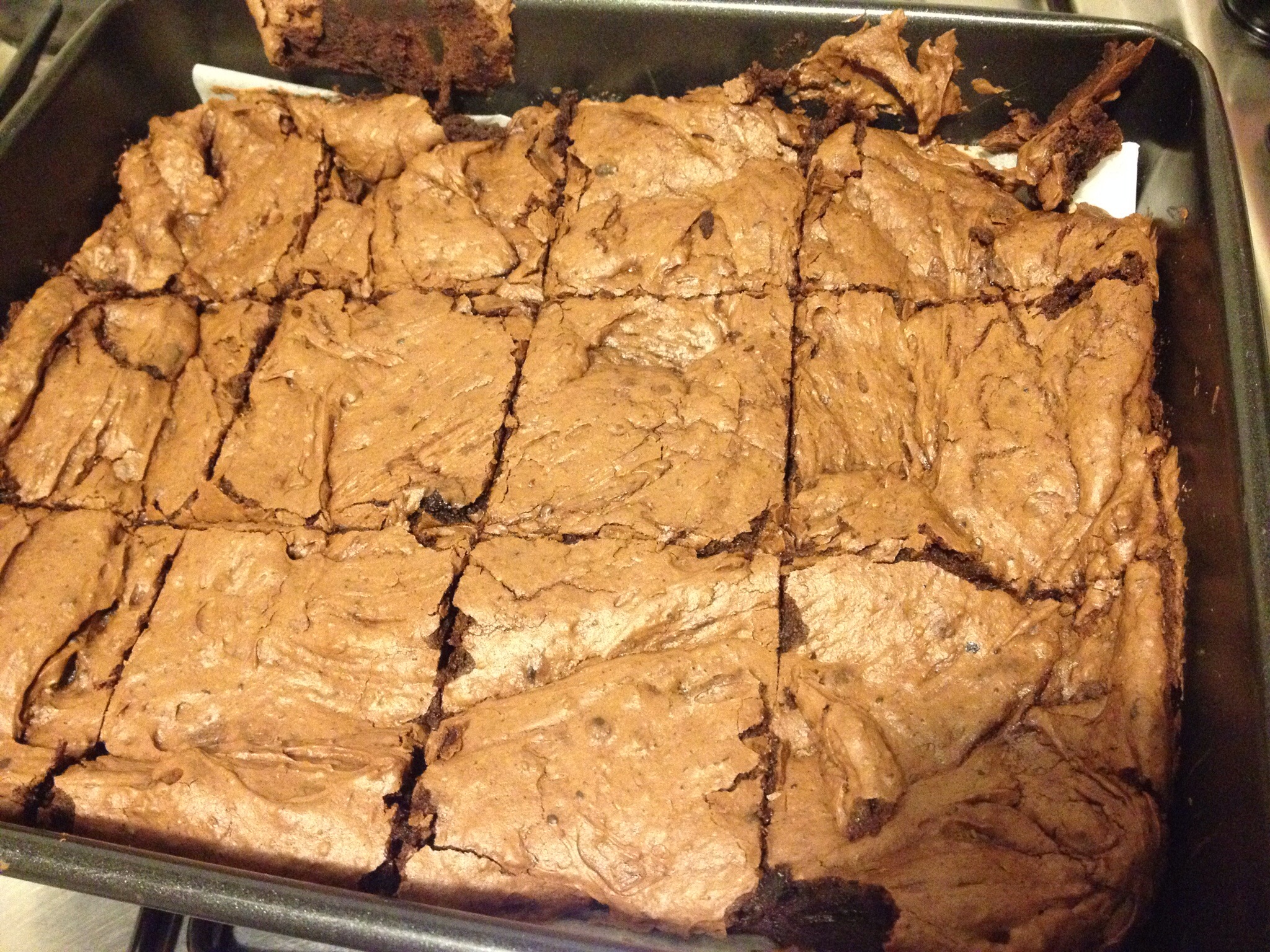
I put Avocado in Brownies and it worked. It began when I came across a suggestion to substitute avocado for butter in baking, not make the baking healthier, but also to make the recipe dairy free. Likewise I read on t’internet about how kidney and black beans can be used as a replacement for flour in some baking recipes. Never one to shirk from a challenge or do things by halves (and with gluten free and dairy free friends) I decided to combine the two. Would it be possible to make brownies without the seemingly moreish creating factors of dairy and gluten? and possibly end up making the brownies that little bit healthier as well? Apparently so. I am not denying they are not quite on par with orgasm in the tin that is salted caramel brownies… but they are dense, very fudgy and most importantly chocolatey goodness.

2015/01/img_1468.jpg

Makes 12
225g 85% dark chocolate
Large pinch of sea salt
1x 400g undrained tin of red kidney beans or black beans
1 small, ripe avocado
2 eggs
225g white sugar
2tsp vanilla extract

1. Drain the kidney beans and bat dry with kitchen towel, to make the beans as dry as possible.
2. Place beans into a food processor and blitz.
3. Add eggs, sugar, vanilla extract and avocado and blitz till mixture is smooth.
4. Meanwhile melt chocolate with sea salt. Add to the mixture and blitz again to a thicker, cake mix like consistency.
5. Spoon into a parchment-lined square tin. Bake for 25-30 mins at 160 oC, until the top is hard but the brownies are still soft underneath. Leave to cool and serve.

2015/01/img_1462.jpg

2015/01/img_1464.jpg

2015/01/img_1466.jpg

2015/01/img_1469.jpg

Twas the night before Christmas…

Now I am essentially what they call a ‘working gal’, I was in the cafe right up to the hilt. This meant, unfortunately, that I was unable to indulge in my usual 3 day cooking marathon in the run up to Christmas, and SHOCK HORROR, had nothing prepared for Christmas lunch before the big day itself. This is unheard of from the girl who usually has everything chopped, prepped and cooked the day before, save the Turkey. I had luckily still found time to create the, now infamous, Christmas spreadsheet and book the grocery delivery slot. -my mother still doesn’t actually know the password, her grocery shops are so infrequent- Credit where credit is due however; I arrived home to a stocked and catalogued kitchen. Mother had received the food delivery and processed it in the only way a lawyer knows how to. This meant that once I breezed in off the dreaded 3 ½ hour coach journey from Cambridge at around lunch time, waving to the grandparents as I walked past them, I could set straight down to work on the Christmas Eve dinner.

I would say it is a tradition in our household to have a three course dinner on Christmas Eve, but considering I instigated it a few years ago when I took over proceedings, it is more of an indulgence of a personal whim. What is more of a family tradition is negotiating the short time frame in which to eat dinner between watching ‘Carols from Kings’ between 5.25pm and 7pm with a glass of bubbly and finishing before the 9.15pm rehearsal for Midnight Mass. The time constraint is combined with the limitations of: my grandmother’s aversion to peas and nuts, my father and his father’s aversion to visible celery, cabbage (I ignored this one) and onions and everyone’s fear of fish bones and remotely undercooked meat. Catering for everyone’s request whilst still gratifying my experimental mindset is a challenge every year.

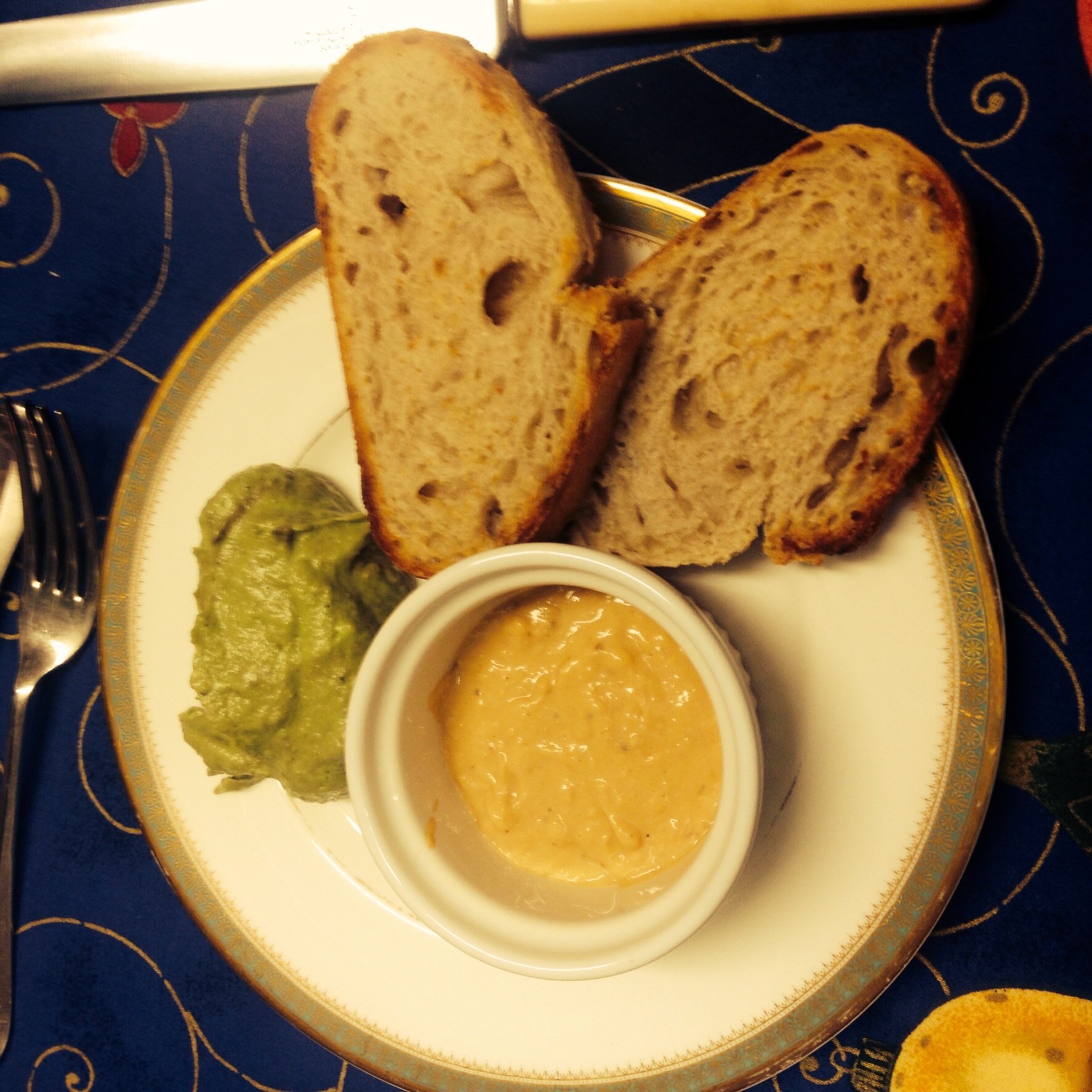
This year we began with a starter inspired by The Organist’s New Years Eve extravaganza last year, crab mayonnaise. Made by simply mixing crab meat ( I chose brown crabmeat but next time I will go for white, more expensive but a better texture) with lemon juice, mayonnaise, black pepper and salt. I served this with an avocado cream made by blending 3 avocados with Crème fraiche, a small pinch of salt and lemon juice. The combination of the salty crab with the smoother avocado made for a pleasing blend.

/home/wpcom/public_html/wp-content/blogs.dir/3bc/67282234/files/2014/12/img_0339.jpg

I followed this with a venison and chestnut stew, herb crumble, winter slaw and roasted squash purée.
For 6:
Brown 600g Cubed venison dusted with flour,pepper and salt in a little olive oil. Remove from the pan and set aside. Add 2 onions, cubed and 6 rashes of unsmoked, thick bacon and sauté with a pinch of salt until the onions are translucent. Deglaze the pan with a glass of port. Add thyme, a bay leaf and a spoonful of juniper berries. Finally return the venison to the pan with a beef stock cube, enough water to fill the pan. Place in the oven with a lid or covered in foil for 1 ½ hours at 180oC. Remove from the oven and add 250g cooked and peeled chestnuts, simmer on the stove top for 20mins until thickened.
For the crumble: Mix 300g breadcrumbs with salt, pepper, chopped parsley and chopped sage. Toast in the oven at 180oC until browned, mixing occasionally.
For the purée: Roast 500g cubed butternut squash with 1 chopped red onion, 3 chopped garlic cloves, a drizzle of olive oil, a drizzle of white wine vinegar, a drizzle of truffle oil and chopped sage at 180oC for 30mins, until soft. Blend.
For the slaw: Chop 1 red cabbage and mix with 1 grated apple, 1 tbsp of mustard, a handful of raisins and 2 tbsp mayonnaise. Season to taste.

/home/wpcom/public_html/wp-content/blogs.dir/3bc/67282234/files/2014/12/img_0338.jpg

The day before Christmas Day I suppose one does not want anything too heavy in order to preserve one’s appetite for the main event. So for dessert I decided on a dish that was small and sweet. A champagne sabayon with popping candy, served with dark chocolate matchsticks. I kid you not, the matchsticks were a revelation. The intense bitterness provided by a lychee vinegar based ganache matched the overwhelmingly sweet sabayon well, adding richness and texture to the dish. NB you would not want too much of the sabayon as it is so sweet, in this case a cocktail glass full was ample.
For the sabayon: Whisk 6 egg yolks with 250g sugar, dash of vanilla extract, 200ml sparkling wine and a pinch of salt over a pan of boiling water for 8mins until it has doubled in size and thickened. Immediately remove to whisk over a bowl of iced water for 10-15mins until light and increased in volume again. Pour into glasses and chill. Sprinkle with popping candy just before serving.
For the matchsticks: Melt 200g milk chocolate and 200g dark chocolate together. Meanwhile bring 25ml cream and 50ml lychee (or other fruit flavoured) vinegar with a large pinch of salt to the boil. Immediately pour over the melted chocolate, leave for 1 min and then combine to a thickened ganache. Spoon into a piping bag, pipe into shapes and chill. When set, dust in cocoa powder.

/home/wpcom/public_html/wp-content/blogs.dir/3bc/67282234/files/2014/12/img_0340.jpg

Christmas Dinner: Round 1

I will not call our Christmas dinner at the house the ‘practice round’, despite it being nearly a week early since all three housemates are leaving to spend the actual day with their parents. It was rather impressive in its own right, especially as it only took us around 2 hours to make. Despite Mark Francis’ pleas we did not get a turkey for the three of us; impractical considering 2/3 of us were leaving a day later. Instead I picked up a chicken on the way home from work. I turned up to discover a beautifully laid table with champagne, wine and dessert wine glasses, place mats and candles. The house had been decorated top to toe in tinsel and some wonderfully garish red fairy lights (Santa’s grotto in our home). We even had a mini wooden tree, Aldi’s finest crackers, (I’ve always wanted a fortune telling fish), and numerous Christmas cards. As I pootled around the cupboards preparing the main course, I even found unnecessary christmas bargains picked up from Aldi – a gift set containing stollen bites and rum, more mince pies (we have a never ending supply), and star-shaped biscuits (which turned out to be great in coffee cocktails).
So with St John’s College Choir’s carol CD blaring from the speakers (interspersed with snippets from the Gospel Messiah Claire Balding had found on YouTube), I set down to work, over-catering as always.
After some craftily-posed cracker-pulling selfies, it was time to actually eat. The starter was pulled out of the fridge, made ahead and stylishly plated up in cocktail glasses. The lovely Claire Balding’s take on the traditional prawn cocktail used horseradish and tomato and chilli relish for a less synthetically tasting Marie Rose sauce, and was delicious.

/home/wpcom/public_html/wp-content/blogs.dir/3bc/67282234/files/2014/12/img_0323-0.jpg

Gradually I began loading the table with dishes for the main course. I decided this year just to make up the recipes as I went along; sometimes it’s more fun to live life on the edge. I think at this point even Mark Francis was pretty pleased we hadn’t gone for the turkey. We had a roast chicken. Over the years I have tried and failed many times to roast a chicken perfectly – the results have usually been either too dry or undercooked. After some years perfecting it, my fail safe method is to rub the chicken liberally with sea salt and pepper, adding a tbsp of butter massaged under the skin (a bizarrely satisfying thing to do), stuff the cavity with various fresh herbs (I used bay leaves, thyme, sage, rosemary), and then put in the oven for 1 hour at 180ºc with a 1 inch level of water (or white wine?) in the bottom of the roasting tin. After 1 hour, uncover and cook for a further 20-30mins until the juices run clear. Leave to rest for 20mins and you have a ready-made gravy base!

/home/wpcom/public_html/wp-content/blogs.dir/3bc/67282234/files/2014/12/img_0320.jpg
Next up were the roast potatoes. I have tried so many times to make these healthy, but I’m afraid while using olive oil produces fairly crunchy and tasty potatoes, nothing can beat goose fat for top-notch roasties. I peeled and cut some King Edward potatoes into uneven knobbly lumps (very important as the more edges, the better the roast potatoes will be). I boiled them for 7-8mins, adding salt, garlic, bay leaves, peppercorns, rosemary and thyme to the water. Meanwhile I heated 1 large tbsp goose fat in the oven until melted. To this, I added the drained potatoes and herbs and roasted at 180ºC for 30-40mins. Even Mark Francis broke his usual 3 potato limit for these. In my opinion though, the Chef’s treat has to be the virtually deep-fried crunchy herbs you are left with at the end.
No Christmas dinner would be complete without parsnips. These are again something I rarely have except at Christmas. But that may be because I am snobby enough only to like my roasted parsnips. I positively turn my nose up at those barely-cooked chunks of parsnips that are usually served up at mass-produced roast dinners. For me a perfect roast parsnip should be thin and slightly caramelised: chewy and crunchy at the same time. So this year I sliced some carrots and parsnips into batons, tossing them in salt, pepper, thyme, truffle oil, olive oil, a splash of red wine vinegar, and a drizzle of honey. I roasted these at 180ºC for 30-40mins until caramelised, stirring every so often.
I am a fan of creamed spinach. I understand it is not everybody’s cup of tea, but since I was forgoing the most delicious part of the Christmas spread (the bread sauce), this was the nearest substitute I could manage at short notice. Simply melt 2 tbsp butter and whisk in 1 tbsp flour, add milk, whisking at small intervals until you get a white sauce. Add salt, pepper and nutmeg. When ready to serve, pour boiling water over a colander of spinach to wilt. Stir the spinach into the white sauce, add cream if desired.
The cranberry sauce is another thing people rarely seem to want to make, which for me makes absolutely no sense. It’s so easy and always sooo much nicer than the stuff from a jar. All you do is put 300g sugar and 300g cranberries in a pan with a splash of vanilla extract, port and water. Add 1 tsp cinnamon and 1 tsp ground cloves. Bring to the boil and stir for 2-3mins, and hey presto! Cranberry sauce that will keep for ages.

/home/wpcom/public_html/wp-content/blogs.dir/3bc/67282234/files/2014/12/img_0321.jpg
On to the stuffing. Mark Francis couldn’t quite believe I was willing to squeeze the meat out of sausage skins in order to make this, but agreed that the end result was worth it. I believe the line CB used to describe them was ‘cakes of fun’, although I think the revised version ‘balls of fun’ has a better ring to it. To make the stuffing I simply mixed the meat of 8 sausages with a handful of cranberries, 1 egg, salt, pepper, a handful of chopped sage leaves, a sprinkling of parsley, 200g chopped chestnuts and 3 tbsp golden breadcrumbs. I shaped this mix into little balls and roasted in the oven at 180ºC for 30 mins.
My final addition to the table was the gravy. This really needs no recipe as thanks to the method of roasting the chicken above, the juices had already collected in the bottom of the pan. I simply whisked in 1 tbsp sifted cornflour to thicken, and added a stock cube to flavour.
Mark Francis’ main contribution were the ‘Ancient Roman style’ brussels sprouts, using an old family recipe. Unfortunately Mark Francis’ mother works along the same lines as me when it comes to cooking, providing him only a list of ingredients with no specific cooking times of amounts. This could have all gone so wrong. But in fact they went down so well I am planning using the recipe for my own Christmas dinner tomorrow. Simply take Brussels sprouts, raisins and olives, braise them in stock for 4-5mins until reduced, and then stir through some pine nuts. When in Rome or indeed Cambridge…

/home/wpcom/public_html/wp-content/blogs.dir/3bc/67282234/files/2014/12/img_0325.jpg
After sitting and groaning at our stomachs for a bit, we decided we would play some games before dessert. While ‘Pass the bomb’ using the Great British Bake Off music instead of a timer was great fun, I’m not sure ‘Twister’ was the wisest idea given the quantity of food consumed… Luckily Claire Balding had made a delightful light dessert of baked pears, which she had stuffed with ricotta and sprinkled with amaretti biscuits. We served it with a discovery of Mark Francis – Aldi’s Finest: a box set of sparkling Asti dessert wine and Cantucci biscuits. While at first we were unsure what “Aldi’s Finest” would entail, it was a wonderful dessert wine, only 5%, sweet but not cloying. Shame you can only buy it in the box set.

/home/wpcom/public_html/wp-content/blogs.dir/3bc/67282234/files/2014/12/img_0326.jpg
Altogether, a fine warm-up for the big day. I will let you know if I manage to persuade the 90 year old grandparents to play Twister!

Feastin

The benefits of singing in a choir may not be immediately obvious to those who don’t. There are the weekly hours you have to put in, the pressure of daily performance, the taking care of your voice. But for those in the know, it is all about the free food and drink: in this case, a decadent 6 course meal with rather nice wine in return for providing some musical entertainment. This is a once-in-a-term occurrence, but when the opportunity comes along we grab it with both hands.
So there we are, all dolled-up to the nines, the Fellows in gowns with red ribbons (for no apparent reason) – classic Cambridge madness. Following the champagne reception, and many photos, we traipsed into Hall. Caius’ food doesn’t usually wow me, but in this case it was rather different…

We started with a smoked chicken salad, mango purée and mango pieces. Whilst not a classic combination, it is certainly a modern favourite and was executed well. The chicken was tender, and the mango was not too sweet. Full marks for presentation to a college that normally serves their Formal Hall meals with a selection of sauce sachets on the table.

/home/wpcom/public_html/wp-content/blogs.dir/3bc/67282234/files/2014/12/img_0827.jpg

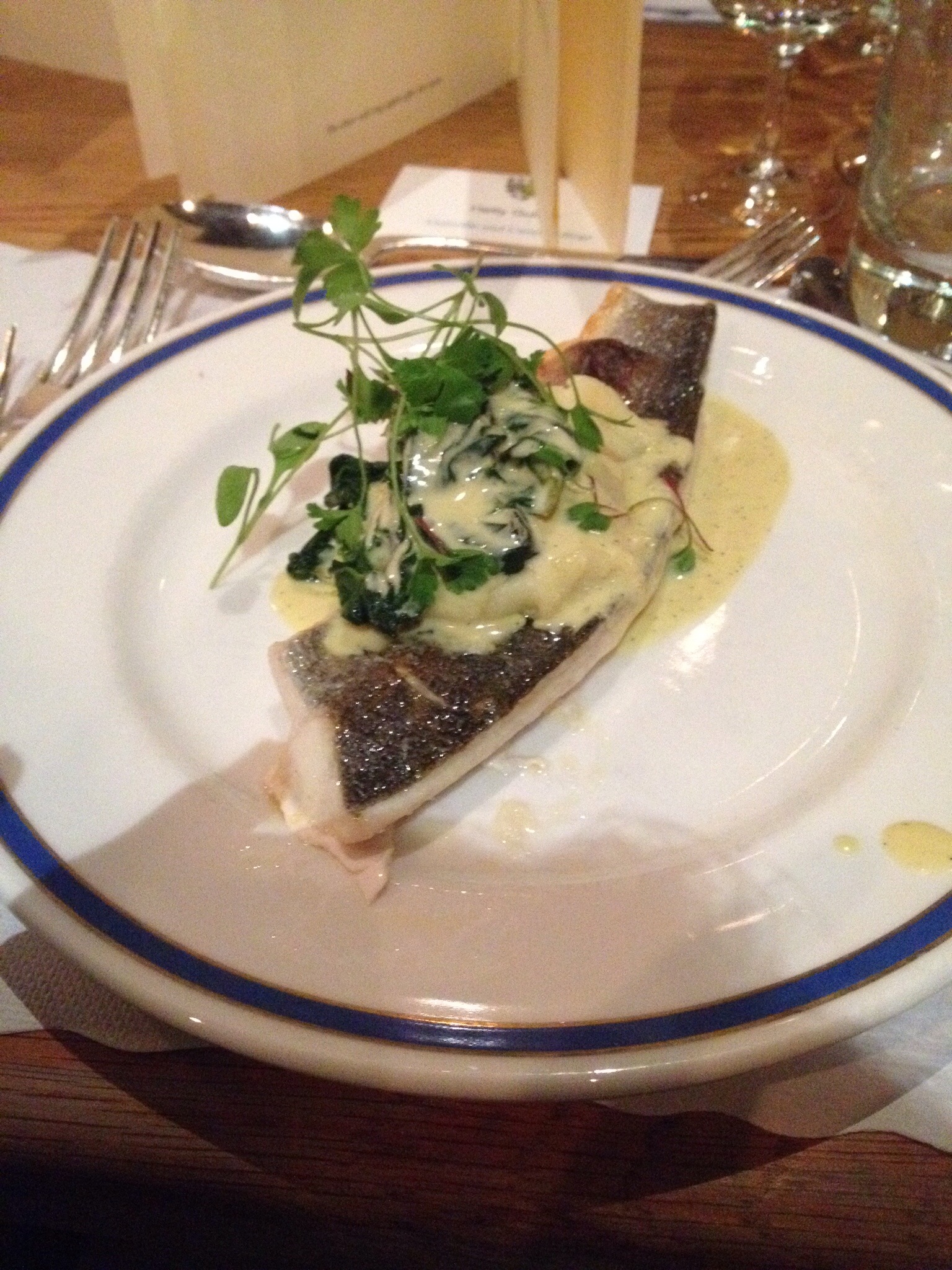
Next we were treated to a delicious pan-fried white fish. I am not entirely sure which type of fish, as for some reason only known to Cauis they insist upon putting the menu in French, for those of us who aren’t multi-lingual – this means guesswork). Unfortunately the fish was served with a vanilla and orange cream. This was just too sweet for the delicate fish and resulted in the whole dish tasting rather like a Terry’s Chocolate Orange.

/home/wpcom/public_html/wp-content/blogs.dir/3bc/67282234/files/2014/12/img_0828.jpg

Surprisingly my favourite course was the palate cleanser of Mojito sorbet. While admittedly it possibly would have been better as a dessert, it was minty and sweet and refreshing. There wasn’t much of an alcohol kick to it, but I’m not sure we necessarily needed it by that point…

/home/wpcom/public_html/wp-content/blogs.dir/3bc/67282234/files/2014/12/img_0829.jpg

For the main course, what else but a nice cut of beef. Sadly this was a little over-cooked: not awful, but I’m afraid not great. However the potatoes, classic new potato roasties, were delicious.

/home/wpcom/public_html/wp-content/blogs.dir/3bc/67282234/files/2014/12/img_0830.jpg

Following this I believe we did a bit of singing, but that wasn’t really what I was there for. It was a shame that the dessert wasn’t anywhere near as good as previous feast desserts, which have mostly been some sort of variation on a Black Forest gateau. This was just a thick and overly-sweet fig jam in a pastry case with sugary cream on top. I was not the only one not to finish it. (There comes a point where even I can’t eat much more!)

/home/wpcom/public_html/wp-content/blogs.dir/3bc/67282234/files/2014/12/img_0841.jpg

You would have thought that would be the end of the meal, however it wouldn’t be a feast if there weren’t more courses than sense. Following some cheerful Wood madrigals, (Charles Wood, GCC 1889-1924), we launched into the cheese course, accompanied by claret, muscat and port. Luckily this is always my least favourite course, as I did not really want to eat much more by this point. Not only am I not a big fan of cheese – Sacre Bleu! – but also I find dessert wines just too cloying and sweet. A glass of port is alright, but any more than that is too much for me. This is why I have learnt to like whisky: my new after-dinner drink of choice.

So that was us quite literally singing for our supper. I think the overall message is that when every course has a sweet component, culminating in a sickly dessert, I would prescribe a low-sugar diet!

Everything stops for tea…

I’m sure I will feel wrath from foodies around the world when I admit that I have never had an afternoon tea. However considering that Mark Francis has started introducing me to ‘fancy’ teas such as Darjeeling, it seemed the natural next step. (Not that the other residents on my staircase last year didn’t try their hardest to convert me from coffee to tea: between U7, U8 and U4 we could have probably started running a tea room). So when I was tasked with finding somewhere in London to see my family, between the hours of 5pm and 7pm, I thought why not try out the ridiculously decadent idea of afternoon tea. Personally I would never say no to cakes for dinner. Our destination of choice was The Marylebone Hotel, 108 brasserie. All in all a pretty classy place, although the low table and sofas made it a little hard to eat.

IMG_0382

108 also caters for the health-conscious, offering a low sugar, gluten free version alongside their traditional cream tea (which was decidedly full of both sugar and flour): for research purposes we decided to try both.

IMG_0383

The selection of teas was a little underwhelming. We were offered only 6 varieties, with no green or mint teas. I went for Darjeeling, feeling Mark Francis would have been proud. It was served in beautiful blue-patterned china teacups with individual strainers.

IMG_0384The food was the kind that looks almost too pretty to eat: little tartlets filled with passionfruit curd which melted in the mouth, pannacotta that was milky and smooth… However my personal favourite was a chocolate mousse cake on a chocolate sponge, garnished with a brandy snap and fresh raspberries: I could have eaten two. Another luxury that you don’t get with any other meal is sandwiches cut into fingers. I feel there is something oddly decadent about eating bread with the crusts cut off for you.

IMG_0385

In fact the only part of the tea which I didn’t love were the scones. While these were perfectly passable, they didn’t wow, which seemed a bit of shame when served alongside some beautifully crafted desserts. The gluten free and sugar free also impressed. As readers of this blog will know I have a slight obsession with macaroons –  those served up here were delicate and flavoursome. They were accompanied by a date flapjack (which I thought was an innovative way to keep the tea healthy), a lemon tart and a chocolate brownie. None of which (I was informed) tasted as if they were in any way healthy!

IMG_0386

Whilst I’m certain this meal will not be replacing a three course dinner for me anytime soon, High Tea could well become a weekend staple. I’m imagining the ultimate foodie Sunday: consisting of brunch and tea. Watch this space… IMG_0387

Ultimate Cookies

One of the perks of working in a cafe is all the free cake available. Some of these taste amazing, and some just good; however I’ve learnt that taste isn’t actually as important as the fact that they all look incredible. It has made me have a bit of a think about my bakes, as whilst they often taste good, it can be hard to make them look aesthetically pleasing. For example my salted caramel brownies, which may taste of orgasmic goodness but look as if they had been sat on by a small child. So when asked if I might contribute something to the cafe menu, I soon realised I couldn’t just make my usual cookie recipe as these often come out in all sorts of different exciting shapes, but not the circle one would expect. Whilst pondering how to achieve the balance between chewiness and perfectly-round cookies, we happened to be visited by some chefs from another local independent cafe; one of whom was a pastry chef. Posing my conundrum to her, she gave me a few tips. Melt the butter, replace caster sugar with brown sugar, and use fewer eggs. Warning: the final recipe produces addictive results.

Chocolate Chip cookies 250g melted butter, 220g brown sugar, 75g white sugar, 2 pinches sea salt, 345g flour, 1 egg and 1 tsp vanilla extract.

  1. Combine the melted butter and sugar until smooth, add the sea salt. Beat in the egg and vanilla, then stir in the flour.
  2. At this point add either 150g milk chocolate chunks or 150g dark chocolate chunks (perhaps with a bit of orange peel or orange extract) or 100g white chocolate chunks with 50g dried cranberries….whatever combinations you like. Go crazy.

  3. Roll into a log shape, wrap in cling film and chill for a minimum of 1 hour. (This is very important as it helps the cookies keep their shape).

  4. Bake in a preheated oven on a baking tray lined with greaseproof paper, for 10-12 mins at 180ºC. NB they should be just cooked and still gooey when you take them out as the outside will harden up as they cool; this way they will still be chewy in the middle.

Oatmeal and raisin cookies 250g melted butter, 220g brown sugar, 75g white sugar, 2 pinches sea salt, 125g oats, 220g flour, 3 tsp cinnamon, 100g raisins, 1 egg and 1 tsp vanilla extract.

Repeat the recipe as above, using the combination of oats and flour rather than just flour.

IMG_0525.JPG

Carrot Cake

You may have noticed that recently I have been utterly hopeless about posting in Gullifer Eats. This may or may not be due to the fact that I now have a full time job as cafe manager at Catesbys in Cambridge, (shameless advertising), and also possibly because I was producing an opera… slightly over-stretching myself!
It is only fitting that I chose to celebrate the end of producing this opera with some baking: how else would you expect me to celebrate? As is probably evident from this blog, I always relish a challenge. I have lived up to the challenge set by Stornaway (who as mentioned in previous posts is gluten free). However a second friend has upped the ante by not only being allergic to gluten, but also dairy. You have to be extremely imaginative when it comes to creating both GF and DF food. It seems to me very unfair that most offerings in restaurants and cafés for those who suffer from these allergies are boring and altogether far too healthy for my liking. So I set out to make a cake that still tastes delicious and bad for you, whilst also being GF and DF. In fact the biggest compliment I got from this recipe was from a GF friend, who had clearly been starved of baked goods for too long, and excitedly proclaimed that it tasted ‘just like real cake’.

260g light brown sugar
260ml vegetable oil
Large pinch sea salt
Dash of vanilla extract
5 eggs
260g gluten free self raising flour
500g pack of carrots, grated
100g raisins
2 tsp cinnamon
2 tsp ground cloves
2 tsp mixed spice
1 tsp ginger
1 tsp bicarbonate of soda

  1. Whisk the eggs, vanilla, salt and sugar together for 3-5mins.
  2. Add carrots, raisins and spices and mix. Add bicarbonate of soda.
  3. Mix in the flour.
  4. Pour into two lined sandwich tins.
  5. Bake at 180ºC for 30-35mins, or until just set. Be careful not to over-cook, as it will cook a little in the tin as it cools.
  6. When cool, sandwich the two halves together with icing made mixing 200g icing sugar with 2-4tbsp orange juice.
  7. Drizzle with more orange icing and/ or icing made with 200g icing sugar, 2-4tbsp water and a few drops of raspberry extract.

The House Party

It is sadly an altogether too rare delight that my housemates and I manage to be in the house all at the same time of an evening. Despite the fact we have lived together for the past 4 months, we very rarely seem to manage to all be there at the same time. This may have something to do with the fact that I work during the day, Mark Francis works during the evening and Clare Balding works whenever she can/has to. When we do find ourselves in the house together, it is usually either early in the morning standing in our bedroom doorways clad in dressing gowns for a quick 10 min chat, or occasionally at about midnight, when we all traipse in from our various social activities to share the gossip we know about those still at the university. Hence the fact that a dinner together is practically unheard of. When we discovered we all happened not to have prior social commitments on the same evening, that evening became a social occasion in itself. I hit up Aldi, Clare Balding brought the Prosecco and Mark Francis brought… himself. We decided we would make one course each: CB the starter, myself the main and MF the dessert. I feel each course reflected our different cooking styles…

We began with a classic combination of melon, prosciutto, Parmesan, rocket and balsamic. It was delicious. Sometimes just combining good quality ingredients together is all you need to make a really good dish. (Plus look how pretty it is!)

IMG_0588-0.JPG

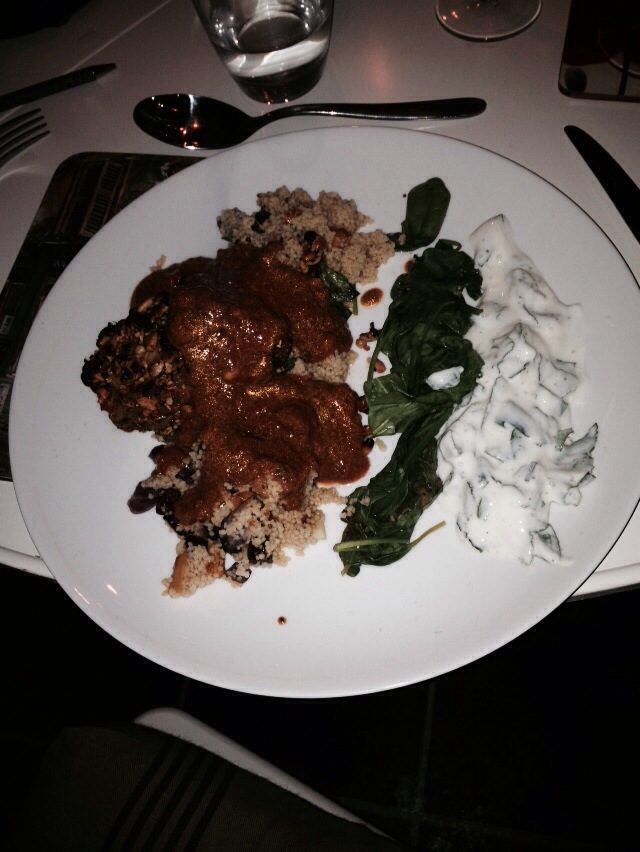
I, of course, went to the other extreme: simplicity was not the aim in my dish. I made lamb neck fillets with a harissa pine nut crust, roasted veg and raisin-studded couscous, a thickened tagine-style sauce, sautéed spinach and a mint raita.

IMG_0589.JPG

The highlight of the meal was inevitably the pizza, sorry, ‘pudding’. Unfortunately by this point the novelty of cooking had worn off, and we were all more interested in watching Christmas adverts on YouTube and listening to 100 year old recordings of castrati sounding incredibly bad. Mark Francis did his best though, and made beautiful looking (slightly pizza-esque) individual strawberry tarte tatins with grated white chocolate. These managed to be not too sweet and full of luscious strawberry flavour: like a fruit-filled strawberry ice cream. However he was too impatient to actually wait for the tarts to cook… As Mary Berry would say (and I know my housemates are fans) the tarts most definitely had rather soggy bottoms.

IMG_0590.JPG

Chocolate Poem

I have a friend, who shall remain nameless (although those of you who are good with word games may realise what her name is), who recently had a birthday party. As a gift, I turned up with a box of chocolates made up of chocolates forming an acrostic spelling of her name.

Irish Coffee

Mango, Lime and Sea Salt Caramel

Olive and Strawberry

Elsewhere on my blog you can find exact instructions on how to make ganache and caramels etc. But here are a few tips on constructing flavour combinations and using fruit in your chocolates.

When I put together a box of chocolates there are three things I always consider. 1) how I can use a balance of white, dark and milk (I feel this means you cover most people’s taste preferences), 2) having a mixture of textures and flavours in each bite (never just one per chocolate), and 3) how all the chocolates relate to one other in the box. Like creating a dish, I like chocolates in a collection to compliment each other. Other things I like to start with are classic combinations, such as sea salt and caramel, and then think about ways to pimp them up. The idea is that not only is each box better than buying one from a shop, as being homemade no two are the same; but also that they are simply more exciting then something you would buy at Thorntons. (Having said this, as a devotee of Lindt Sea Salt Dark Chocolate bars, I do agree that sometimes a little bit of simplicity just hits the spot.) I know some people feel that homemade chocolates should be made with high quality chocolate, but I think if the flavours are vibrant then any chocolate works fine. So long as the dark chocolate is at least 75% cocoa content, it doesn’t really matter about the other two. A little cost-saving tip!

I think I may have been inspired by my recent trip to a Brazilian fruit market (see Brazil Baby, I’m in Miami Bitch) because my first thought for the letter M was Mango and Lime. As followers of my blog know, I have recently moved to a house virtually next-door to an Aldi. This means I have the luxury of using exotic fruits in my food whilst still working to a budget. I think one of the things that makes homemade chocolates special is the fact that they can use real fruit rather than extracts. To make the caramel, I pulverised mango and simmered the pulp with lime and chilli, before straining and adding to sugar and continuing to make my usual salted caramel. It meant that it was a thinner consistency than my usual caramel, and was lighter in colour. This would probably work for most fruit caramels. I poured the caramel into a white chocolate shell: usually I wouldn’t put these two together as I find the combination too sickly-sweet, but the chilli and lime here off-sets the sweetness.

For the Irish coffee, I went with a whisky gel and an espresso ganache. Already powerful flavours, so I put them with milk chocolate, providing the sugar that completes the ‘drug triumvirate’ (alcohol, caffeine and sugar) in all the best things: affogatos, Irish coffees, jäger bombs….

The third flavour achieved something which I’ve wanted to try for ages: savoury with chocolate. Black olive caramel (again pulverised, like fruit, with a pinch of salt) and a sweet strawberry ganache. Using strawberry purée helped the chocolates pack a flavourful punch. These were then smothered in dark chocolate, and dipped in crumbled almonds to add texture.

I don’t like to say these chocolates encapsulate their namesake as I feel it would be rude to insinuate she was either over caffeinated, spicy or alternative. But I feel she appreciated the comedic effort in the word-play of the names.

Brazil baby, I’m in Miami bitch

Where to start. I am very lucky as a singer to be given the opportunity to go on the most exciting tours to the most exciting places. Sometimes you can’t quite believe that you get to visit these places for free. Admittedly you have to sing for your supper but I’m sure any singer would tell you that if you don’t love to sing you probably shouldn’t be in a choir. As oppose to being an instrumentalist, as a singer, tour can really hit your instrument hard, what with the late nights, alcohol, air conditioning, travelling, and in this case sightreading. I’m certainly not complaining that my first task as a member of Cauis College Choir, Cambridge was a trip to Brazil, although I won’t deny it was pretty daunting plunging head first into a choir that was already fully formed as the one new member. However if you’re going to get to know people there is no better way than a small contained space flying through the air for 18hours where people are getting less and less aware of which time zone they’re in let alone sleeping. At least you’re all as disorientated at this point as each other. In fact my whole experience was made a lot easier by the fact that I was probably constantly bouncing around during the tour, dosed up with caffeine in a bid to stay awake. This was not just because Brazilians (and In São PAolo in particular) make the best coffee, but also we needed it what with the 2 overnight coach rides to and from Rio, the fact we never got a chance to recover from the first set of flights until we hit the second and necessity to stay up each night drinking Caipirinhas.

Incidentally Caipirinhas were my first Brazilian discovery. Caipirinhas are a cocktail made from crushed limes, sugar and the local alcoholic spirit, Cachaca, a spirit made from distilled sugar cane in a similar way to rum. The main difference between rum and cachaca is that cachaca is made from sugarcane juice whereas rum is made from the by product of sugarcane, molasses, so tends to be stronger usually and ages better. There is no better thing to drink in Brazil, this cocktail encapsulates the Rio laid back lifestyle. The best way to drink it is on Ipanema beach as the sun goes down while switching between dancing in a free Zumba class and swimming in the sea, which incidentally we did. However Caipirinhas are not just a one trick pony. On our first night in Brazil we were thrown a huge barbecue ( this may have also contributed to the necessity for caffeine consumption) where a batman would make us any type of Caipirinha that we liked, ranging from tangerine and chilli to passion fruit and ginger, made not just from cachaca (which I stuck to) but also gin, sake, vodka, anything we liked.

It was at this barbecue that we gained our first experience of the abundance of salty goodness that is Brazilian cuisine. I may have had a huge lunch complete with chocolate. Are but that wasn’t going to stop me digging into the griddled halloumi, blackened and bubbling, the melting slices of rare beef, dipped in an addictive breadcrumb like farofa (fried cassava flour), the crime de Milho (sweetcorn cream stuff) or the bite size salty morsels, chicken hearts (I kid you not these delicious). Then of course there were the puddings which I am ashamed to say I barely made a dent in. While I tried the stuff of heaven, coconut ice cream, and the suffocatingly sweet brigadoo (condensed milk and chocolate truffles) I failed to try any of the array of cakes or passion fruit tart. I believe I missed out on half the savoury dishes I didn’t even see, take me back!

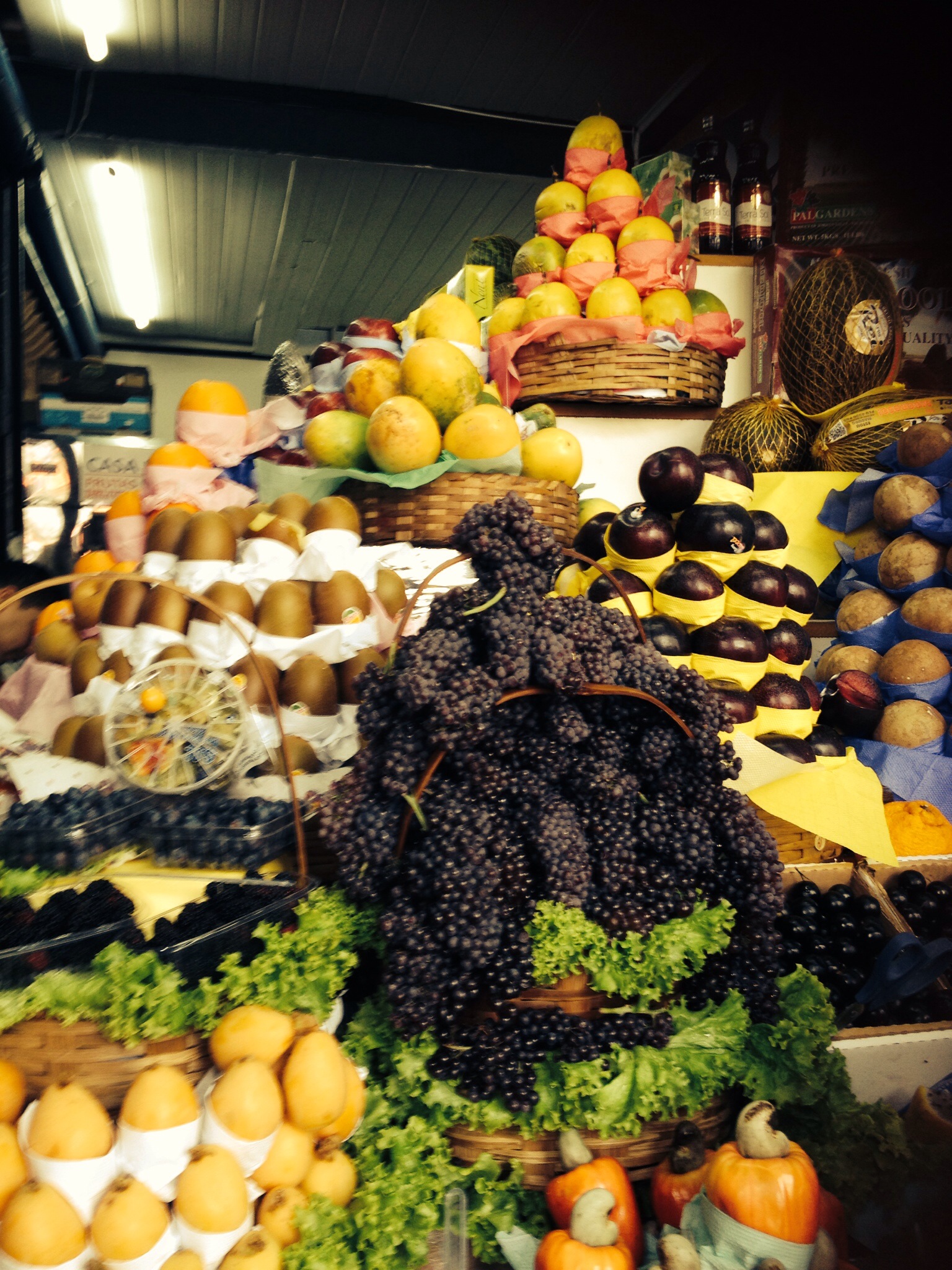
This wasn’t the only time we would be presented with an array of new and exciting foods which somehow seem to surpass all British food in flavour. On our first day sightseeing in São Paolo we were taken to Mercado Municipal, a food market on supreme scale
.

IMG_0298.JPG
I had not even heard of half the fruit on the stalls, let alone tasted or seen them before
.

IMG_0207-0.JPG
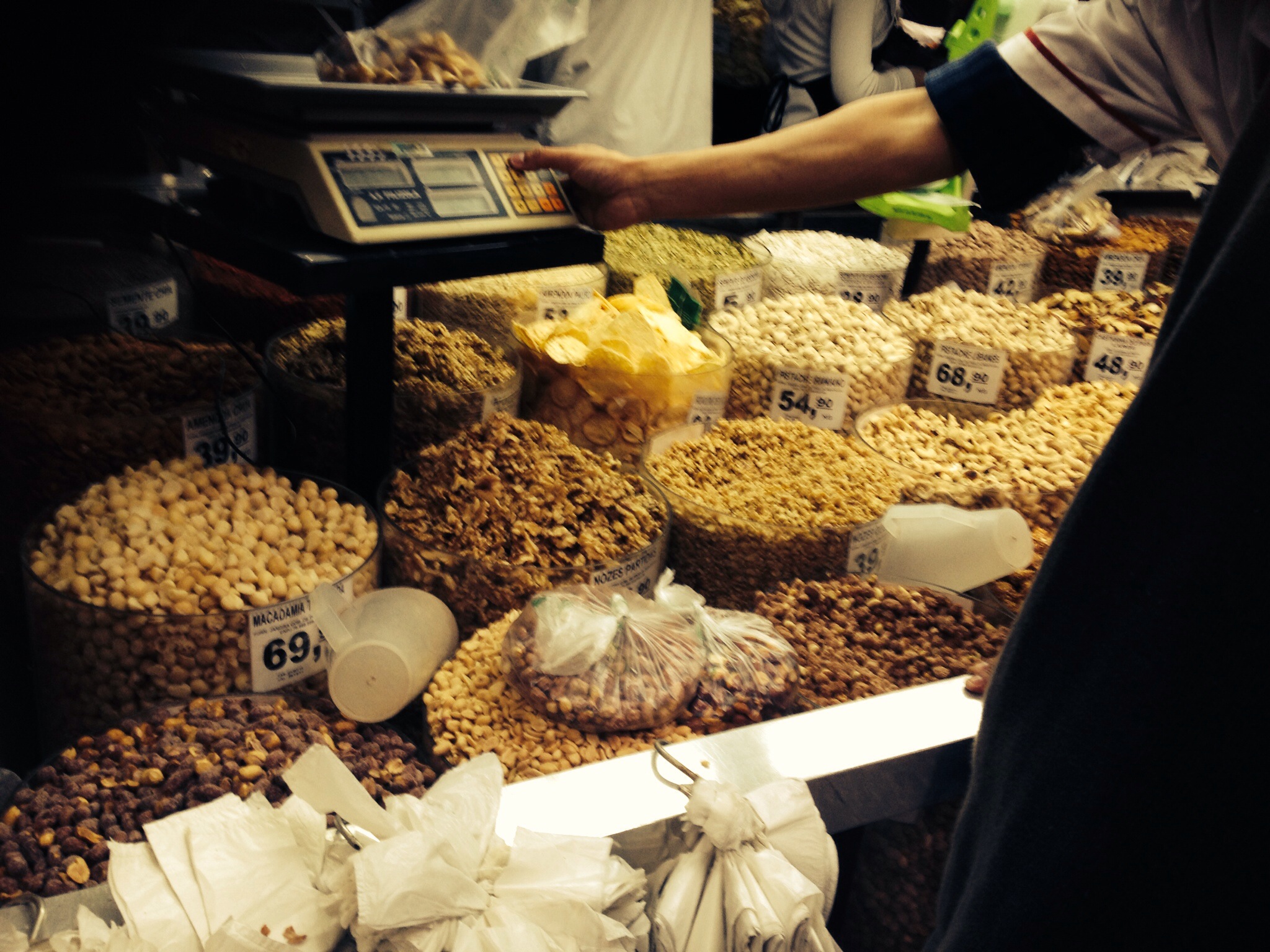
I’m not entirely sure how they make money considering every time we passed a store we were given pieces of fruit, salted cod, Viagra (wasabi covered peanuts) for free but presumably they were trying to entice us even if we didn’t buy anything. Having said that one of the Irish men on the way into the centre had bought dates that tasted something along the lines of cake mix, I kid you not. I recommend travelling to São Paolo for those dates.

The next foodie experience (other than the time out choirmaster turned on a mostly unbreakfasted crowd to suggest we skip lunch, whereupon we started debating who we would eat first if it came down to it) was the staple meal for the next three days of tour. We turned up at the university (which had already been on strike for 3 months) and were given rice, beans, salad, chicken or beef. We guzzled it down gratefully having not slept the night before and were expected to go straight into an interactive Brazilian workshop. Little were we to know we be give this meal for once a day for the subsequent meals for the remainder of tour, oh well, it was free food. Having said this, grey beans, salad, salty chicken and chips are not necessarily a food of choice, the frozen yoghurt at the canteen, however, was above par and served with fruit almost forcing you to be healthy.

Our trip could not have ended in a stranger way. We ended up on Miami beach…. For the day….
Having said that, the Americans know how to cook. We arrived and most of us( ok mostly just me) were excited for a 3 course brunch however Miami was apparently deserted, or maybe that was just the area we were in. But I am Not kidding when we eventually found brunch, it was GREAT . Not only do Americans understand the importance of an iPhone charger at every venue, but the pancakes,eggs, Mexican eggs, smoothies, coffee and acai( a type of berry) were amazing, I won’t even get started on the maxi version of a sundae (small if you are American). Miami is not just for the food I hear though. I didn’t have a bad time at the beach, it may even be worth it for the white beaches and bath temperature waters, but then I’m a foodie, what would I know.
I cannot wait to get back to Brazil, although maybe to try a slightly more varied version of the food. The extremes of amazing food and mediocre food (never bad) is worth exploring. Plus I notice a niche in the market for condensed milk chocolates and more coffee in England. So much strong coffee. Five Cups a day in England don’t even cut it.